

Learn how Turnitin similarity scores and AI detection work, then use a student-friendly alternative to check drafts, fix issues, and submit with confidence.
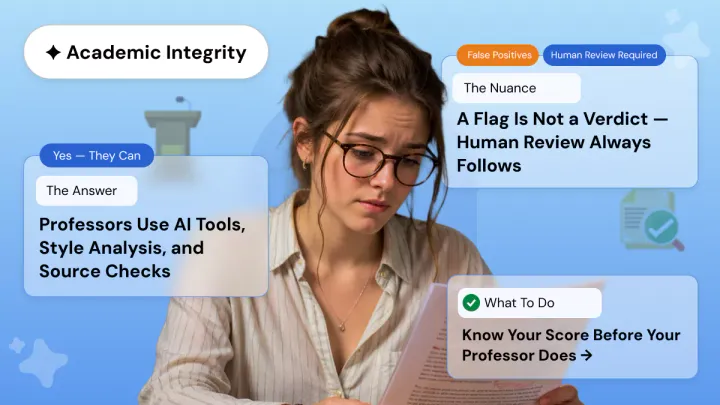
SUMMARY: The page explains how Turnitin similarity reports work, what the percentage and color codes mean, and how Turnitin’s AI detection flags possible machine-generated writing. It also notes common causes of false positives, such as citations, reference lists, and poor paraphrasing.
It argues that students need pre-submission access to plagiarism and AI checks, then presents humanfyai.com as a Turnitin alternative with similarity scanning, source links, and AI detection. The page ends with practical tips for reducing unnecessary matches before submitting.
Turnitin Plagiarism Checker: Similar Software as Universities
You have spent hours writing, editing, and formatting your paper, and now the deadline is staring you down. The last thing you want is to submit blindly and hope your university’s Turnitin check returns a clean similarity score. Most students feel this exact pressure because Turnitin sits behind a locked door; you cannot buy an individual subscription. You need institutional access, which means your professor controls when and how you see your results. That gap leaves a lot of students searching for a reliable Turnitin check alternative they can run before they hit submit.
Why Universities Rely on Turnitin
Turnitin has become the standard plagiarism detection tool across more than 16,000 institutions in 185 countries. When you upload an assignment through your school’s learning management system, Turnitin scans your text against a database that includes billions of web pages, academic journals, and previously submitted student papers. It generates a similarity report that shows what percentage of your text matches existing sources, and it color-codes the results so your instructor can review flagged sections. Turnitin itself is explicit about what this number means: the similarity score reflects how much text matches other sources, not a verdict on plagiarism. A high percentage might simply mean your bibliography, quotations, or technical terminology overlapped with existing content.
Understanding Your Turnitin Similarity Report
The similarity report can feel intimidating when you see a percentage pop up after submission. Here is what actually happens under the hood. Turnitin breaks your text into phrases and compares them against its database, then calculates a similarity score based on matched words divided by total words. A score of 15% on a 1,000-word paper means roughly 150 words matched something in Turnitin’s index. This could be entirely legitimate; properly cited quotes and reference lists routinely show up as matches. Many universities consider scores below 15-20% acceptable, though policies vary by department and assignment type.
The real value comes from reviewing the details, not fixating on the headline number. Open the match overview panel and look at where the overlaps occur. Are they concentrated in your bibliography? Are they scattered common phrases? Or is one entire paragraph matching a single online source? That last scenario is what needs your attention. The color coding helps here; blue means no matches, green signals low similarity, yellow flags moderate overlap, orange points to high similarity, and red indicates very high similarity that demands a rewrite.
For a detailed breakdown of how Turnitin generates and interprets similarity scores, refer to the official Turnitin support guide on understanding the similarity score. It covers everything from match groups to exclusion filters.
Turnitin AI Detection and What Students Should Know
In April 2023, Turnitin rolled out an AI writing detection feature that runs alongside its similarity checker. The tool analyzes linguistic patterns like perplexity (how predictable word choices are) and burstiness (how much sentence length varies) to estimate the probability that text was generated by AI models such as ChatGPT. Turnitin claims approximately 98% accuracy on unedited AI content, though independent research has questioned these figures. A 2023 study in the journal Patterns found that AI detectors frequently misclassified non-native English writing as AI-generated, raising concerns about fairness.
Here is the practical takeaway for you: Turnitin’s AI detection score is a flag for human review, not a final judgment. Scores between 1% and 19% display as an asterisk to indicate low confidence, and even higher percentages trigger a conversation rather than automatic penalties. Vanderbilt University, Northwestern University, and the University of Waterloo have all disabled Turnitin’s AI detection feature after concerns about false positives. If your instructor uses this tool, understand that it is probabilistic and imperfect.
Why Students Need a Pre-Submission Turnitin Check Alternative
The core frustration with Turnitin for students is access. You cannot log into Turnitin on your own, run a scan, fix issues, and resubmit. You upload through your institution’s portal, wait for processing, and only then see your similarity score. If the number looks problematic, you may have no opportunity to revise before grading. That workflow pushes students toward third-party tools that replicate Turnitin’s core functions with individual access.
According to a 2025 survey by PlagiarismCheck.org, approximately 90% of students now use AI tools for writing assignments, and the average AI-generated content detected in submitted texts ranges from 10-25%. Poor paraphrasing remains the number one cause of plagiarism flags in student papers. These numbers explain why pre-submission checking has moved from “nice to have” to essential.
What to Look for in a Turnitin-Style Plagiarism Checker
Not all plagiarism checkers deliver the same depth as a Turnitin scan. When evaluating alternatives, focus on these features:
- Database breadth. The tool should scan against web pages, academic publications, and previously submitted papers. A narrow index misses matches that Turnitin would catch.
- AI detection. With generative AI now mainstream, you want a checker that flags AI-generated text alongside traditional plagiarism.
- Privacy protection. Your draft should not be stored permanently or added to a public database, which could trigger false positives on future submissions.
- Clear reporting. Look for color-coded highlights, source links, and match breakdowns that explain where and why text was flagged.
- Student-friendly pricing. Pay-per-document models work well for occasional checks, while monthly subscriptions suit students who write frequently.
How humanfyai.com Compares
humanfyai.com was built to close the gap between what universities use and what students can access. The platform combines plagiarism detection with Turnitin AI detection capabilities, letting you scan drafts before submission and address issues on your own timeline. The similarity report highlights matched text, identifies sources, and breaks down your score so you can distinguish between harmless overlaps (citations, common phrases) and problematic sections that need rewriting.
The AI detection component analyzes writing patterns to estimate the likelihood of machine-generated content, giving you the same type of signal your professor will see. Because you control when and how often you scan, you can iterate on your draft, improve paraphrasing, add missing citations, and resubmit for verification until you are confident. This workflow mirrors what institutional Turnitin offers, but without the locked-door problem.
Practical Tips for Keeping Your Similarity Score Low
Before you run any Turnitin check, take these steps to minimize unnecessary matches:
- Exclude your bibliography and quotes from the scan if the tool allows it. Reference lists naturally match thousands of other papers.
- Paraphrase deeply instead of swapping synonyms. Restructure sentences and explain ideas in your own words.
- Cite every quote, statistic, and paraphrased idea. Missing citations are the fastest way to trigger flags.
- Avoid copying assignment prompts, templates, or rubric language into your paper. These show up as matches across submissions.
- Run your draft through a checker early, not two minutes before the deadline. You need time to revise.
The Bottom Line
Turnitin remains the gold standard for institutional plagiarism detection, but its closed-access model leaves students flying blind until after submission. A reliable alternative like humanfyai.com gives you the same core functionality, from similarity scanning to AI detection, with the flexibility to check, revise, and recheck on your own schedule. Academic integrity matters, and having the right tools in your hands before you submit makes all the difference between confident writing and last-minute panic.
Worried about plagiarism scores or AI detection flags? Get the exact same plagiarism & AI report your professor sees in 15-20 minutes. Trusted by thousands of students, researchers, institutions, and agencies.