

Discover how to buy a Turnitin plagiarism report safely as a student, understand similarity scores, AI detection thresholds, and avoid repository issues.
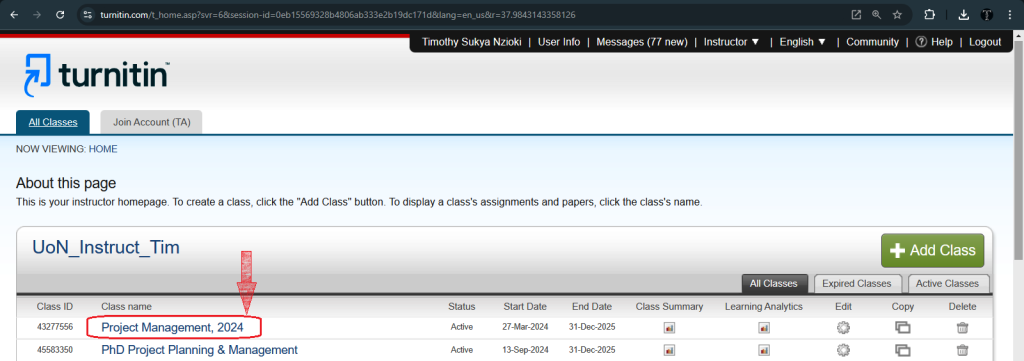
You finished your essay, but a lingering worry remains. You want to see exactly what your instructor sees before you press that final submit button. The problem is that Turnitin restricts its platform to schools and universities, leaving individual users locked out. If you are trying to figure out how to buy a Turnitin plagiarism report, you need an option that works without submitting your text to a permanent institutional database. Using a reliable Turnitin checker for students through third-party platforms allows you to get a comprehensive scan of your paper without ruining your final submission.
The Direct Buying Problem for Students
You cannot go to the official website and purchase a single scan as an individual. The company sells enterprise licenses directly to schools, universities, and publishing houses. This sales model creates a massive obstacle for people who want to run a proactive Turnitin check. If your institution does not provide a draft check portal, you are basically flying blind.
Fortunately, alternative avenues exist. Third-party vendors and scanning services purchase access or use specialized software integrations to generate authentic files for you. When you look into buying these options, the main rule is to select a service that specifies a no-repository check. If a service saves your document to the global database, your university system will flag your final paper as 100% plagiarized against your own draft.
How to Buy a Turnitin Plagiarism Report Safely
To secure an authentic document, you need to use a verified processing platform. You upload your document to an independent platform like humanfyai.com or a specialized vendor site. You pay a small fee per scan or page, and the platform runs your text through the official processing engine via an administrative backend that bypasses institutional storage.
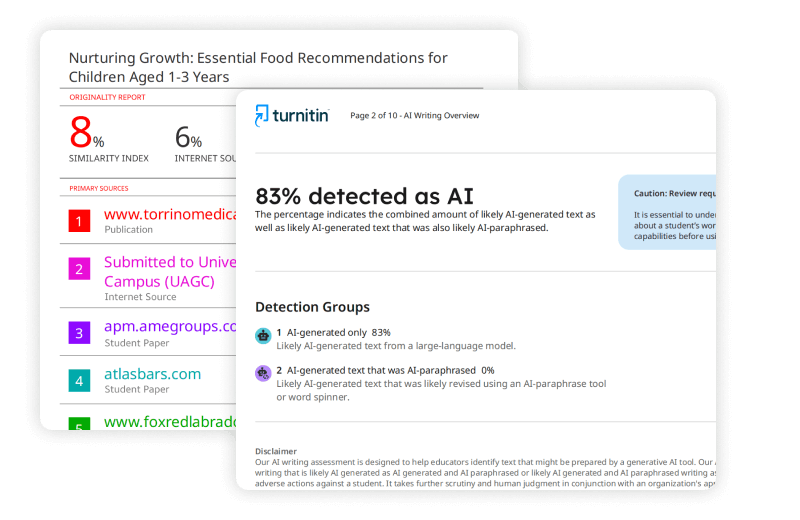
When you purchase a report, you receive a full PDF download. This document looks identical to the dashboard your professor reviews. It highlights matching text blocks, links to the original online sources, and breaks down the exact percentages of matching strings.
How Long Does a Turnitin Report Take to Generate?
A common question people ask after paying for a scan is: how long does a Turnitin report take to generate? For a brand new document, the system usually processes the text in 10 to 15 minutes. The software strips your formatting, matches text strings against billions of web pages, journals, and stored papers, and compiles the analysis.
However, things change if you are scanning a paper you already ran through the system before. If you submit a second or third draft to the same portal, the generation time stays fast. But after three attempts, the system places a strict throttle on your account.
Does Turnitin Really Take 24 Hours?
Yes, under specific conditions. People often wonder, does Turnitin really take 24 hours? The answer depends entirely on your submission history. If you are uploading a fourth revision of the same paper within a short window, the system intentionally delays the report for exactly 24 hours. The developers built this feature to stop people from changing words one by one to game the algorithm.
The 24-hour rule gives the system enough time to refresh its cache and clear out previous drafts. So, if your deadline is tomorrow morning and you are on your fifth revision, do not expect an instant update.
Why Is My Turnitin Similarity Report Taking So Long?
If you are staring at a spinning loading wheel, you might ask, why is my Turnitin similarity report taking so long? Beyond the 24-hour rule for multiple resubmissions, several technical bugs cause delays:
- Dense Image Files: If your document contains massive vector images, the processing engine struggles to convert the file. It is best to swap high-resolution images for basic formats like JPEG or PNG.
- Missing Plain Text: The file needs actual words. If the first page is just a large image with zero text, the processor can freeze up entirely.
- Bad Conversions: Third-party PDF converters sometimes compress text into unreadable blocks. Stick to files saved directly from Microsoft Word or Google Docs.
- Server Overload: During peak midterms and finals weeks, millions of submissions flood the servers, slowing down processing speeds worldwide.
Official Turnitin Documentation:
For a comprehensive list of reasons why a report may be delayed, refer to the official support guides: Troubleshooting Similarity Report loading delays and errors.
How Many Hours Does Turnitin Take?
If you plan your edit schedule, you need to calculate exactly how many hours does Turnitin take to return results. For a basic check through a purchased student service, it takes less than an hour. Usually, you receive the document in your email inbox within 10 to 30 minutes.
If you are dealing with the resubmission penalty, it takes a full 24 hours. Plan your writing schedule so you never have to wait out that 24-hour block right before your paper is due.
Understanding Your Plagiarism Similarity Score
Once your Turnitin scan finishes, you get a percentage score. This number represents the amount of text in your paper that matches other documents in the database. A common point of confusion is figuring out what counts as an acceptable number.
Is 25% on Turnitin Too High?
When you see a quarter of your paper highlighted, you might panic and ask, is 25% on Turnitin too high? In most academic departments, a 25% score sits right on the borderline. It might be perfectly fine if your paper contains a lot of direct quotes, long legal citations, or a massive bibliography.
However, if that 25% consists of copied blocks of text without proper quotation marks, your professor will likely flag it for review. Most universities prefer scores below 15% or 20%. A 25% score means you should open the file and look closely at what text strings are triggering the matches.
Is a 35% Turnitin Score Bad?
Generally speaking, yes, a 35% Turnitin score bad news for a standard essay. This number indicates that more than a third of your writing matches existing sources word for word. Unless you are writing a specific type of literature review or a comparative analysis that relies heavily on block quotes, 35% will trigger an academic integrity alarm.
When your score hits this level, you need to revise your writing. You must rewrite matching paragraphs in your own voice and fix your citations. Simply swapping out a few words here and there will not lower the score, because the algorithm tracks phrases and sentence structures, not just individual words.
Turnitin AI Detection Capabilities
Plagiarism checking changed completely with the arrival of large language models. A modern Turnitin check does not just look for copied web pages; it evaluates the patterns of the writing itself to spot machine-generated content.
Can Turnitin Really Detect ChatGPT?
The short answer is yes. Many people wonder, can Turnitin really detect ChatGPT? The software uses a highly specialized predictive model that looks for language patterns. Humans write with high perplexity and burstiness, meaning our sentence lengths vary wildly and our word choices are unpredictable.
ChatGPT writes with high predictability. It selects the statistically most probable next word. Turnitin tracks these probability patterns. Even if you use advanced prompts, the core structure often triggers the system’s AI indicators.
Does Turnitin Detect AI Less Than 20%?
A major concern for students who use AI for brainstorming or editing is the exact threshold of the detector. Does Turnitin detect AI less than 20%? Yes, the detector can identify tiny fractions of AI text within a larger human-written document. The system breaks your paper down into small segments and evaluates each section independently.
If you copy and paste a single paragraph from ChatGPT into a five-page essay, the overall AI score might show up as 15%. The system will highlight that specific paragraph in the AI dashboard while leaving the rest of the paper clean. The tool does not just give a blanket score; it pinpoints the exact sentences it suspects were generated by a computer.
Why You Need a No-Repository Turnitin Scan
When searching for a way to complete a Turnitin check, understanding the concept of a database repository is foundational. Turnitin operates a massive repository where millions of student papers are stored. When a university professor uploads a final assignment, the software compares that paper against everything else in the database to prevent student-to-student collusion.
If you buy a report from an unverified seller who uses a standard institutional account, that account might be configured to automatically save every upload to the repository. If that happens, the system indexes your paper. When your actual professor runs the paper a few days later, the scanner will show a 100% similarity match against your own document.
To prevent this nightmare, reputable third-party services use “no repository” settings. This configuration allows the algorithm to scan your paper against the entire internet and academic archive without saving your text to the permanent database. Your paper remains completely invisible to future scans, keeping your academic record completely safe.
Deciphering Turnitin Color Codes
The PDF report you purchase categorizes similarity levels using a distinct color-coded system. Understanding these colors gives you an instant view of your document’s status.
| Color Flag | Similarity Percentage Range | Meaning and Action Required |
| Blue | 0% | No matching text found. Your document is completely original or uses completely unique phrasing. |
| Green | 1% to 24% | Standard matching level. Usually caused by common phrases, citations, and bibliographies. Review highlighted parts to verify citations. |
| Yellow | 25% to 49% | Moderate matching. Indicates significant blocks of copied text or over-reliance on source material. Requires immediate editing and paraphrasing. |
| Orange | 50% to 74% | High matching level. Half or more of the paper matches existing documents. This suggests heavy copy-pasting or structural copying. |
| Red | 75% to 100% | Severe matching level. The paper is almost entirely identical to existing sources. This requires a total rewrite from scratch. |
Using this table as a reference allows you to prioritize your editing workflow after you buy your report.
Technical Requirements for an Effective Turnitin Scan
When you buy a report, you want the system to read your file accurately on the first try. If you format your document incorrectly, the software might fail to extract the text, leading to empty reports or long delays.
Minimum Word Count Limits
The plagiarism engine can scan very short documents, but the AI detection tool has strict limitations. For the AI detection system to generate a score, your document must contain at least 300 words of continuous prose writing. If you submit an abstract, a short list, or a set of bullet points, the AI score will remain blank.
Maximum File Size and Word Limits
The platform cannot process infinitely large documents. Your file must stay under 100 megabytes in size. For most text-heavy essays, file size is never an issue unless you include massive uncompressed graphics. Additionally, the text cannot exceed 30,000 words in a single upload. If you are checking a doctoral dissertation or a long master’s thesis, you will need to split the document into separate chapters and scan them individually.
Supported Document Formats
The software extracts text best from standard document types. Use these formats to guarantee a successful check:
- Microsoft Word (.docx): The most stable format for text extraction.
- Adobe PDF (.pdf): Make sure the text is selectable. If you upload a scanned PDF that acts like a picture, the system cannot read the words.
- Plain Text (.txt): Excellent for basic text checks, though it strips your formatting.
- Rich Text Format (.rtf): A reliable backup format if Word files act up.
Avoid using Apple Pages, Microsoft Works, or password-protected files. The system cannot open these formats and will reject the upload instantly.
What to Do When Your Similarity Score Is Too High
Let’s look at practical steps to fix your paper after you buy your report and notice a yellow or orange flag. You do not need to delete your entire essay; you just need to apply smart editing strategies.
Master the Art of Paraphrasing
Many students change every third word in a sentence using an online thesaurus. This tactic fails because the algorithm tracks sentence structure and contextual flow. Instead of swapping individual words, read the source paragraph, close your eyes, and explain the concept out loud as if you were speaking to a friend. Write down exactly what you said. This method changes the sentence architecture completely, which drops your similarity percentage significantly.
Fix Your Citation Structures
Sometimes a high score happens because you cited your sources correctly but failed to format them in a way the machine understands. If you copy a direct quote, place quotation marks around it. Some variations of the software ignore text inside quotation marks if the instructor enables that setting. Also, make sure your bibliography has a clear heading like “References” or “Works Cited,” since the algorithm uses these terms to filter out the back matter of your paper.
How Turnitin Separates Human Writing From AI Content
The mechanics of AI tracking deserve a closer look. When you execute a Turnitin check, the software looks for the signature markers of large language models. AI engines do not think; they calculate probabilities. They are designed to select the most logical word to follow the previous one.
Humans do not write that way. Our writing is messy, irregular, and full of stylistic quirks. We write a short three-word sentence followed by a complex thirty-word sentence containing semicolons and parenthetical notes. Turnitin uses two primary metrics to evaluate this: perplexity and burstiness.
- Perplexity: This measures how unusual or surprising the word choices are. AI text has very low perplexity because it uses predictable language patterns. Human writing has high perplexity because we select unexpected words and metaphors.
- Burstiness: This tracks the variation in sentence length and structure. AI text is incredibly uniform; its sentences often have a similar length and rhythm. Human writing is bursty, featuring abrupt shifts in sentence length and structure.
If you buy a Turnitin plagiarism report and see a high AI percentage, it means your text reads with too much uniformity and predictability. To fix this, you must introduce human variability by rewriting sentences, using active voice, and mixing up your sentence lengths.
The Benefits of Buying an Independent Turnitin Check
Investing in an independent verification before submitting your final paper provides several clear advantages for students who want to preserve their academic reputation.
Total Privacy and Confidentiality
When you upload an essay to your university dashboard, your professor sees every single attempt and draft if the portal is configured that way. If your first draft looks terrible or contains accidental plagiarism, that footprint remains visible. When you buy a private report, the results are entirely your eyes only. You can fix mistakes, clear up citation errors, and remove accidental matches long before anyone evaluates your work.
Protection Against Accidental Plagiarism
Most academic misconduct cases do not involve intentional cheating. Students often take sloppy notes, copying sentences from articles into their scratchpads without adding source links. Weeks later, they paste those notes into their drafts, genuinely believing they wrote them. A quick pre-submission scan catches these honest mistakes, saving you from severe disciplinary actions.
Confidence in Your Originality
Entering an exam or submitting a major capstone thesis causes enough stress on its own. Wondering if your reference list or common phrases will trigger an automated cheating flag adds unnecessary anxiety. By running a personal check, you verify your originality percentages beforehand, allowing you to hit submit with complete peace of mind.
How the String-Matching Algorithm Works
To understand why your paper gets flagged, you must understand the algorithm behind the screen. Turnitin does not read your essay like a human professor does. Instead, it breaks your text down into tiny pieces called “n-grams.” These are sequences of consecutive words.
The software looks for matching patterns of these word sequences across its database. If you have a sequence of more than six or seven consecutive words that match another document exactly, the system marks that string as a match. This is why changing a word here and there does not work. If you have a sentence of twenty words and you only change two of them, the system still finds two long sequences of matching words on either side of your edit.
To beat the string matching system honestly, you have to break up the sequence. You must change the verbs into nouns, alter the order of the clauses, or combine separate ideas into a completely new sentence structure.
Handling False Positives in Turnitin Reports
Automated software is far from perfect. Often, a high similarity percentage is simply a collection of false positives. A false positive occurs when the system flags text as plagiarized when it is actually perfectly legitimate.
Common Templates and Cover Pages
If your university requires a specific cover page layout containing the university name, course code, instructor name, and date, every single student in your class will upload that identical text block. The scanner will flag this cover page as matching hundreds of other papers. This type of match artificially inflates your overall score, but your instructor will ignore it because it represents required administrative text.
Standard Scientific Definitions and Formulas
If you are writing a paper in physics, chemistry, or mathematics, you will inevitably include standard formulas and definitions. Writing out the first law of thermodynamics or a standard statistical description using unique phrasing is almost impossible. The software will highlight these definitions in green or yellow. Professors know these matches are unavoidable, so they look past them during manual reviews.
Broad Bibliographies and Citations
The largest source of false positives is your reference list. Because every researcher citing a specific paper must format the title, authors, and journal name identically, your bibliography will light up with matches. When you buy an independent check, look at the settings to see if you can filter out the bibliography. This adjustment gives you a much more accurate view of your actual writing content.
How to Select a Trustworthy Checking Service
Because individuals cannot purchase access directly from the main Turnitin website, a large secondary market of vendors has emerged. Not all of these platforms operate ethically or securely. You must evaluate options carefully to avoid compromising your data.
Look for Clear Privacy Agreements
Your essays and research papers represent valuable intellectual property. Some shady free scanning websites survive by selling uploaded student papers to essay mills or online databases. When you choose a service, read their terms of service. Verify that they promise to delete your files from their servers after processing and that they offer a strict no-repository guarantee.
Avoid Free Accounts and Cracked Passwords
You might see advertisements on social media or forums offering cracked instructor accounts or cheap shared credentials for a few dollars. Avoid these options entirely. Universities monitor administrative accounts for strange login patterns, such as an account logging in from multiple countries simultaneously. If the university bans the account while your paper is in the queue, you lose your money and your file could end up stuck in an unverified state. Stick to established platforms like humanfyai.com that route submissions through legitimate developer APIs.
Verify Customer Support Options
If your file gets stuck due to a server glitch, you need to speak with someone who can reset the queue. Reliable platforms provide a direct support channel, such as live chat or a fast responsive email ticket system. If a website lacks clear contact information, do not trust them with your payment details or your academic papers.
A Step-by-Step Guide to Processing Your Document
To get the best results when you purchase an independent document check, follow a clear workflow. This method keeps your files safe and guarantees an accurate read.
Step 1: Clean Your Document Layout
Before uploading your document to a platform like humanfyai.com, remove any unnecessary elements that might confuse the text extractor. Strip out decorative borders, intricate tables that contain only numbers, and complex formatting structures. Make sure your main headings use basic styles. If you have an image on the very first page, move it down or insert a few lines of introductory text above it. This step protects your document from getting stuck in the system processing queue.
Step 2: Choose the Proper Scan Options
When finalizing your order on your chosen student checking platform, look at the available configuration toggles. If the service allows you to customize the scan parameters, select options that mirror your professor’s syllabus instructions. For example, if your course outline states that bibliographies are excluded from the plagiarism score, enable the “Exclude Bibliography” toggle if available. Most importantly, double-check that the “No Repository” option is selected so your paper stays out of the permanent archive.
Step 3: Complete the Payment and Upload
Submit your document through the secure upload portal and finalize the payment. Most services charge based on total word count or a flat rate per document. Once your transaction clears, the platform automatically pushes your paper into the processing queue.
Step 4: Download and Interpret the PDF Feedback
When the processing engine completes its run, you will receive a notification to download your comprehensive file. Open the PDF and look at the breakdown. Focus first on the highlighted text strands. If you see long blocks of identical text highlighted in yellow or red, focus your immediate attention on rewriting those specific paragraphs. Check the separate AI indicator score to see if your text patterns match the predictability metrics of machine language models.
Institutional Gatekeeping vs. Independent Checking Solutions
The main reason a student searches for options to buy an independent scan is the structural design of university plagiarism frameworks. Academic institutions often treat plagiarism checkers as disciplinary mechanisms rather than educational resources.
The Problem with Single-Submission Systems
Many university course dashboards only allow a single file upload per assignment. The moment you submit your file, it goes directly to the professor for final grading. You get no opportunity to review the similarity report or fix accidental citation mistakes. This creates an environment of intense anxiety, where an honest mistake can result in a failing grade or an academic misconduct hearing. Independent checking platforms solve this systemic flaw by providing an educational sandbox where you can review, learn from, and fix your text before any official eyes see it.
The Rise of False AI Accusations
AI tracking software is notoriously prone to false positives, especially for non-native English speakers or writers who naturally prefer a structured, formal style. Because machine learning models flag text based on statistical predictability, clean human writing can occasionally trigger a false AI indicator. If you upload your paper directly to a university system and it registers a 40% AI probability score, you might face a stressful interrogation from an instructor. By running an independent check beforehand, you can identify these false indicators and alter your word choice or sentence rhythm to reflect your natural human style clearly, eliminating the risk of groundless accusations.
The Evolution of Digital Similarity Systems
Plagiarism tracking has evolved drastically since its inception. Originally, software engines only matched basic text phrases against a limited index of static web pages. If you rearranged a couple of words, the old systems could not identify the source material.
Today, the infrastructure utilizes advanced natural language processing. The software indexes billions of pages of content, including private academic databases, scientific journals, out-of-print books, and every student paper uploaded since the late 1990s. The modern system reads your sentences contextually. It understands synonyms, tracks grammatical architecture, and flags paraphrased text if the core concepts and structures mirror an existing source too closely.
This advanced capacity explains why simple word-swapping techniques are completely obsolete. To achieve a clean score, your writing must reflect genuine comprehension and independent composition. Buying an independent analysis helps you see exactly where your phrasing remains too close to your research materials, giving you a roadmap for genuine writing improvement.
What Databases Does a Turnitin Scan Cross-Reference?
When you purchase a report, your paper goes through an exhaustive cross-examination. The software matches your text against three distinct database categories:
The Current and Archived Internet Index
The system continually crawls the public internet, saving copies of web pages, blog posts, news articles, encyclopedia entries, and forum discussions. Even if a website went offline years ago, the system retains its contents in its archive. If you pull information from an obscure archived website, the scanner will still find it.
The Professional Publications Database
Turnitin partners with major academic publishers, scientific libraries, and research consortia. Their index contains millions of medical journals, legal reviews, conference proceedings, textbooks, and dissertation abstracts. This comprehensive database prevents students from copying material from paid research databases that sit behind paywalls.
The Global Student Paper Repository
This is the largest database component, containing hundreds of millions of essays submitted by students worldwide over the past several decades. This repository prevents you from recycling a paper written by a friend at a different university or using an old essay you found online. When you buy a private report, your document is scanned against this massive repository, but it is not saved into it, ensuring your draft remains entirely private.
Ethical and Legal Safety of Private Reports
Students often wonder if buying a plagiarism report is considered a form of cheating. The reality is quite the opposite. Using a Turnitin checker for students as a proofreading tool is an excellent way to maintain high academic standards.
An Educational Proofreading Tool
Think of an independent check as an advanced grammar and citation assistant. You are not hiring someone to write your paper; you are simply using an automated tool to audit your own original work. It helps you identify where your formatting falls short or where you forgot to add a citation link. Most universities openly encourage the use of plagiarism checkers during the drafting process, provided the tool does not index the paper and cause a false positive match later on.
Safeguarding Your Personal Identity
When you use a reputable independent platform, you do not need to provide your university name, your student identification number, or your professor’s details. You upload your text anonymously, pay for the processing resource, and receive the data. This boundary protects your privacy and keeps your academic records separate from your personal editing workflow.
How Professors View Plagiarism Scores vs. AI Flags
Understanding the psychology of grading helps you interpret your report accurately. Instructors look at similarity scores and AI probabilities through entirely different lenses.
Interpreting the Similarity Report
A high similarity percentage does not automatically mean a student cheated. Professors look at the context of the matches. If a paper has a 30% similarity score, but all the highlighted text resides within the bibliography and properly cited block quotes, the instructor will give the paper an A grade without hesitation. They look at the report to find uncredited text strings, missing quotes, or clear copy-paste jobs from websites.
Interpreting the AI Writing Report
AI probability scores are handled with much less flexibility. Because generative AI tools are relatively new, many institutions apply strict policies to machine text. If your paper returns a high AI percentage, instructors often suspect that you did not write the material yourself. Because AI detectors provide a statistical probability rather than definitive proof, a high score can initiate a complicated conversation. This is why checking your text with an independent scanner before submitting is so useful; it lets you identify sections that read with artificial predictability and adjust them before an instructor sees them.
Scenario Analysis: When to Edit Your Paper Based on Scores
To make your decision-making process straightforward, let’s examine common report readouts and the exact steps you should take before your university deadline.
| Scenario | Plagiarism Score | AI Detection Score | Risk Assessment | Recommended Action |
| Scenario A | 8% | 0% | Low Risk | Your paper is clean. The minor similarity matches are likely standard references or common phrases. You can submit this draft safely. |
| Scenario B | 28% | 5% | Moderate Risk | The plagiarism percentage is problematic. Look at the highlighted sections. Paraphrase matching paragraphs and verify that your quotation marks are correctly placed. |
| Scenario C | 12% | 45% | High Risk | While your text matches very few online documents, nearly half of your writing displays machine-like predictability. Rewrite the flagged paragraphs completely to introduce natural human sentence variety. |
| Scenario D | 40% | 60% | Severe Risk | The paper relies heavily on copied sources and AI generation. This draft will trigger immediate academic penalties. You need a comprehensive rewrite of the entire text. |
Reviewing this table helps you map out your editing priorities based on the specific metrics returned by your purchased report.
Best Practices for Writing a Clean Academic Paper
The most efficient way to get a clean report is to build clean habits directly into your drafting workflow. Preventing high similarity scores is far easier than trying to fix a messy paper at the last minute.
Implement Split-Screen Note-Taking
When conducting research, do not copy and paste text blocks directly into your main working document. Keep your research articles on one side of your screen and your draft document on the other. Read the source material thoroughly, minimize the browser window, and write down the concepts from memory. This separation stops you from accidentally mimicking the source author’s sentence structure.
Use Direct Quotes Sparingly
Some students fill their papers with massive block quotes to meet the word count requirement. While this keeps you safe from plagiarism accusations, it results in a bloated similarity score and shows a lack of independent analysis. Use direct quotes only when the original author’s exact phrasing is absolutely necessary for your argument. For standard facts and explanations, always choose to paraphrase in your own distinct voice.
Track Your Citations in Real Time
Never leave your citations for the end of your writing session. The moment you type a fact or an idea that came from a source, add a temporary in-text note with the author’s name and publication year. This habit protects you from forgetting where an idea came from, eliminating a major source of accidental plagiarism flags.
Can students check a paper in Turnitin for Similarity before submitting it to an assignment?
Worried about plagiarism scores or AI detection flags? Get the exact same plagiarism & AI report your professor sees in 15-20 minutes. Trusted by thousands of students, researchers, institutions, and agencies.