

SUMMARY: Academic integrity tools now analyze both text similarity and potential AI-generated writing, prompting students and researchers to review work before submission. Official plagiarism and AI detection reports compare documents against large databases including scholarly journals, web content, and previously submitted papers.
Similarity scores reflect how much text matches existing sources but do not automatically indicate misconduct, as citations and standard terminology contribute to results. AI detection analyzes linguistic patterns as one indicator among several, and both tools are recommended as supplements to human judgment rather than definitive assessments.

Check your essay before you submit. See exactly what your professor sees.
Get the exact same Turnitin report your professor uses. Join 50,000+ students who submitted their essays with confidence this semester.
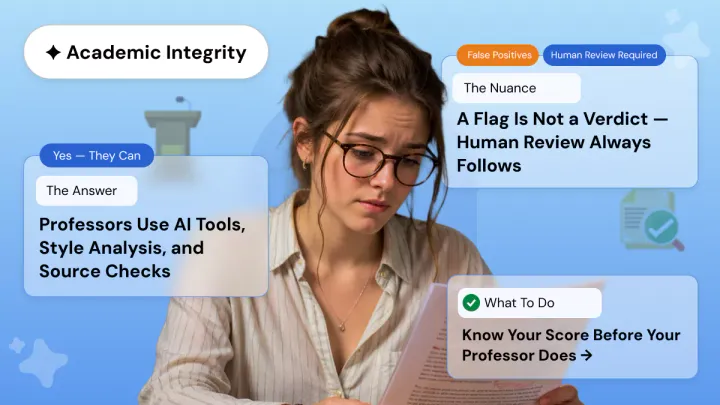
Official AI Detection and Plagiarism Checker: The Complete Guide for Students and Researchers
Check Your Academic Work Before Submission
Submitting an assignment, dissertation, research paper, or journal manuscript without reviewing it for originality can be risky. Universities and publishers increasingly use advanced content analysis systems that evaluate both text similarity and potential AI-generated writing. As a result, students, researchers, and professional writers are seeking reliable ways to preview their reports before final submission.
An official AI detection and plagiarism checker gives users access to the same style of analysis used by many educational institutions worldwide. Instead of relying on free online tools with limited databases, official reports provide a more accurate view of how a document may be evaluated during academic review. Modern academic integrity platforms compare submissions against extensive databases containing web content, scholarly publications, journals, books, and previously submitted student papers. They can also analyze writing patterns that may indicate AI-assisted content generation.
What Is an Official AI Detection and Plagiarism Report?
An official report is a comprehensive document analysis that examines two critical factors:
1. Similarity Detection
Similarity checking identifies text that matches existing sources. The report highlights matching passages and provides links to the sources where similar content appears. This allows writers to determine whether citations, quotations, or paraphrasing need improvement.
The goal is not necessarily to achieve a 0% similarity score. Academic papers often contain references, quotations, technical terminology, and common phrases that naturally generate some level of similarity. Instead, the objective is to ensure that all borrowed information is properly attributed and that the work demonstrates original thinking.
2. AI Writing Detection
AI detection systems analyze writing patterns, language structures, predictability, and other linguistic characteristics that may suggest machine-generated content. Educational institutions increasingly use these tools to gain insight into how a document was created and whether additional review may be necessary.
Why Students Need a Pre-Submission Check
Many students assume their work is original because they wrote it themselves. However, similarity reports often reveal unexpected matches from:
- Online articles
- Academic journals
- Public repositories
- Previously submitted assignments
- Commonly used educational materials
A pre-submission review helps identify these issues before an instructor sees them. This gives students an opportunity to revise problematic sections, strengthen citations, and improve overall originality.
For AI-generated content, a review can help writers identify passages that appear overly generic, repetitive, or formulaic. Making revisions before submission may improve clarity and demonstrate stronger personal authorship.
Benefits of Using an Official Report
Greater Accuracy
Many free plagiarism checkers scan only publicly accessible websites. Official academic integrity systems compare documents against significantly larger databases that include scholarly sources and institutional repositories. This broader coverage often results in more accurate similarity analysis.
Detailed Source Matching
Official reports typically provide source-by-source breakdowns showing where matches occur and how much text overlaps with existing content. This level of detail makes it easier to revise specific sections.
AI Content Insights
Advanced AI detection tools can provide indicators that help educators evaluate potential AI-generated writing. While no detector is perfect, these systems offer valuable insights into writing authenticity and consistency.
Academic Confidence
Knowing how your document may appear during institutional review can reduce uncertainty and help you submit your work with greater confidence.
Who Should Use an AI Detection and Plagiarism Checker?
Undergraduate Students
Students working on essays, research assignments, discussion posts, and coursework can benefit from reviewing originality before submission.
Graduate Students
Master’s and doctoral candidates often work on lengthy research projects where similarity management becomes increasingly important.
Researchers
Researchers preparing conference papers, journal submissions, or technical reports can use originality checks to identify accidental overlaps with existing literature.
Content Writers
Professional writers, bloggers, and copywriters may use similarity analysis to ensure content originality and maintain publishing standards.
Understanding Similarity Scores
One of the most common questions students ask is:
Is a High Similarity Score Always Bad?
Not necessarily.
A similarity score simply indicates the percentage of text that matches existing sources. The context behind the score is often more important than the number itself.
For example:
- Properly quoted and cited material may contribute to similarity.
- Reference lists can increase similarity percentages.
- Common academic terminology may trigger matches.
- Templates and assignment instructions can appear in reports.
Because of these factors, educators often review the report itself rather than relying solely on the percentage score.
How AI Detection Works
Modern AI detection systems evaluate patterns commonly associated with machine-generated writing. These systems may examine:
- Sentence structure consistency
- Predictability of language
- Vocabulary patterns
- Stylistic uniformity
- Linguistic characteristics
However, AI detection should be viewed as an indicator rather than definitive proof. Researchers continue to study both the strengths and limitations of AI classification technologies. Academic experts note that AI detection tools should be used alongside human judgment rather than as standalone evidence.
Best Practices Before Running a Check
To obtain the most useful report:
Review Citations
Ensure all borrowed ideas, statistics, and quotations are properly referenced.
Paraphrase Effectively
Avoid simple word substitutions. Instead, rewrite concepts using your own understanding and structure.
Check References
Verify that your bibliography follows the required citation style.
Edit AI-Assisted Content
If you used AI tools during drafting, revise the text carefully to reflect your own voice, analysis, and reasoning.
What to Do After Receiving Your Report
Once you receive your analysis:
- Review highlighted matches.
- Verify all citations.
- Rewrite sections with excessive overlap.
- Improve paraphrasing where necessary.
- Recheck the document if significant revisions were made.
This process helps strengthen originality while preserving academic integrity.
Frequently Asked Questions
Can a document have some similarity and still be acceptable?
Yes. Many legitimate academic papers contain some similarity due to citations, quotations, references, and standard terminology.
Are AI detection results always accurate?
No AI detector is 100% accurate. Most institutions use AI detection as one factor among many when evaluating submissions.
Should I run a check before every submission?
For major assignments, dissertations, research papers, and publication manuscripts, a pre-submission review is highly recommended.
Is originality important even when content is factually correct?
Absolutely. Academic integrity requires both accurate information and proper attribution of sources.
Final Thoughts
Academic standards continue to evolve as AI writing tools become more common. Whether you are a student preparing an assignment, a graduate researcher completing a thesis, or an author submitting a manuscript, reviewing your work with an official AI detection and plagiarism checker can provide valuable insight before submission.
By identifying similarity concerns, highlighting citation issues, and providing AI-writing analysis, these reports help writers strengthen originality, improve transparency, and submit work with greater confidence.
Worried about plagiarism scores or AI detection flags? Get the exact same plagiarism & AI report your professor sees in 15-20 minutes. Trusted by thousands of students, researchers, institutions, and agencies.